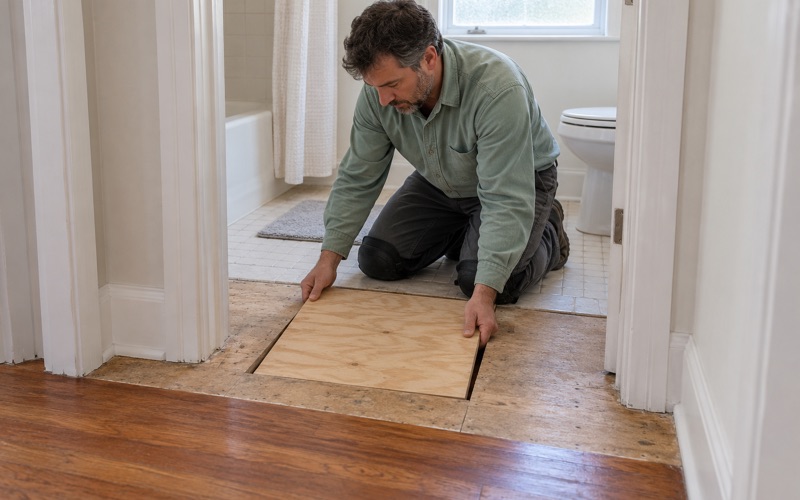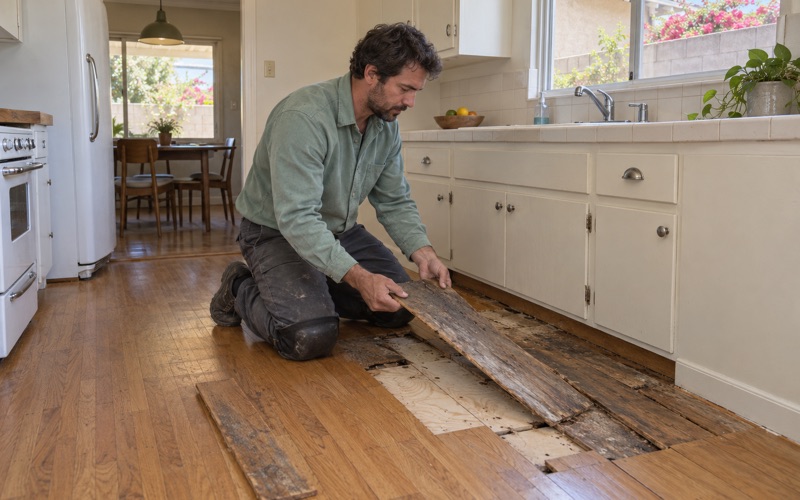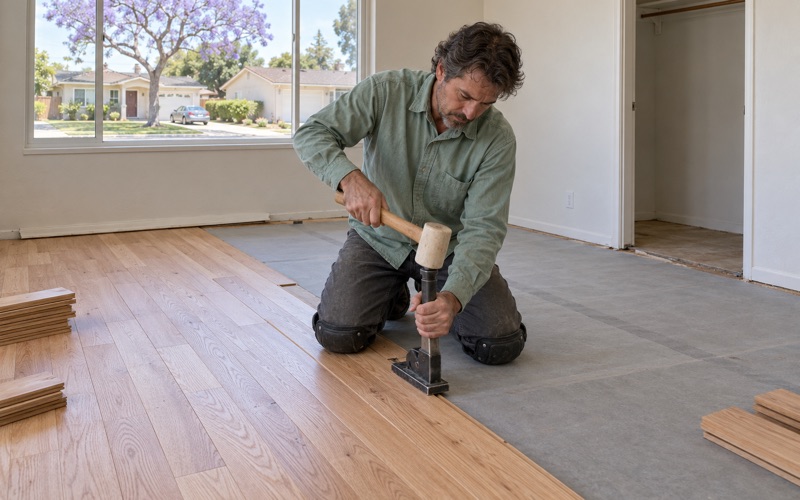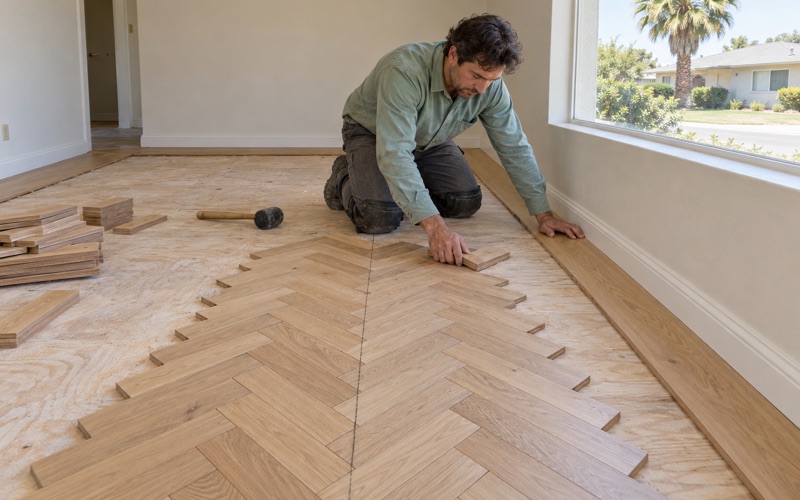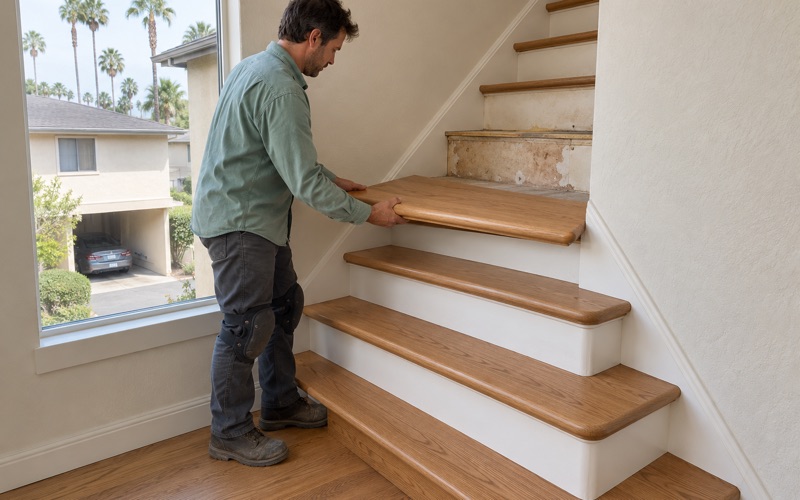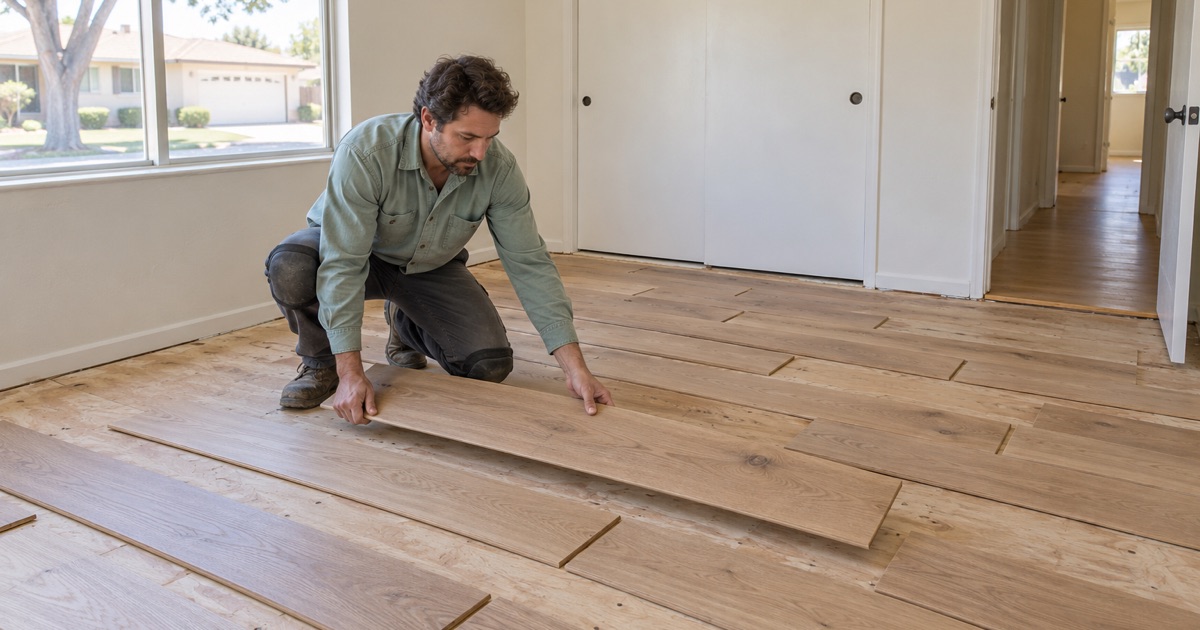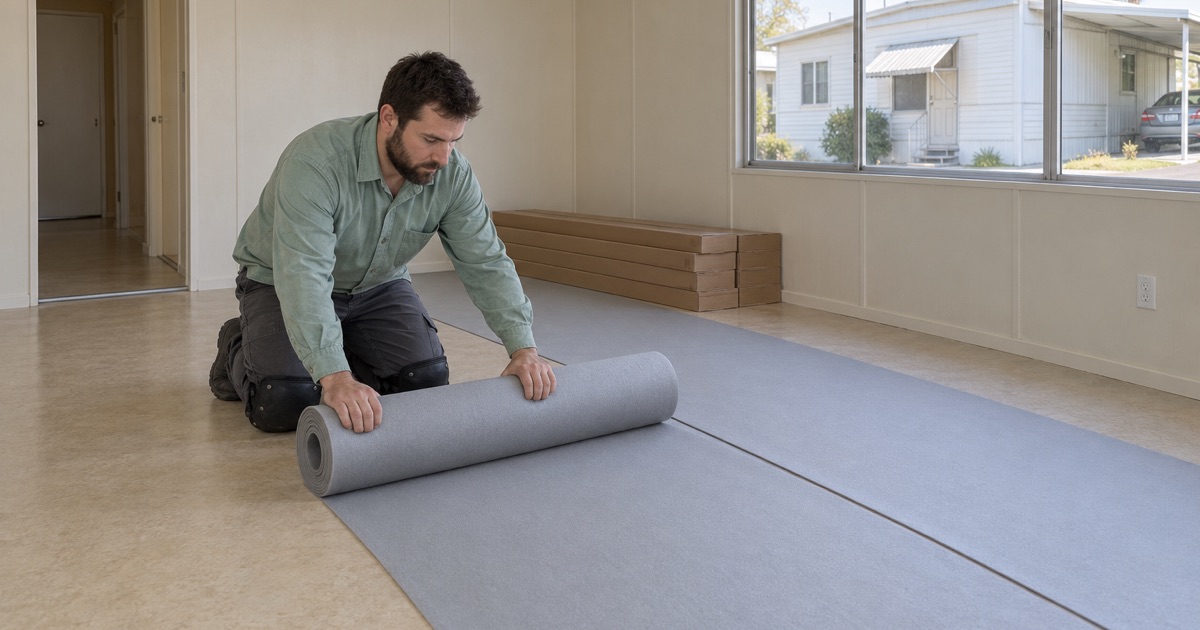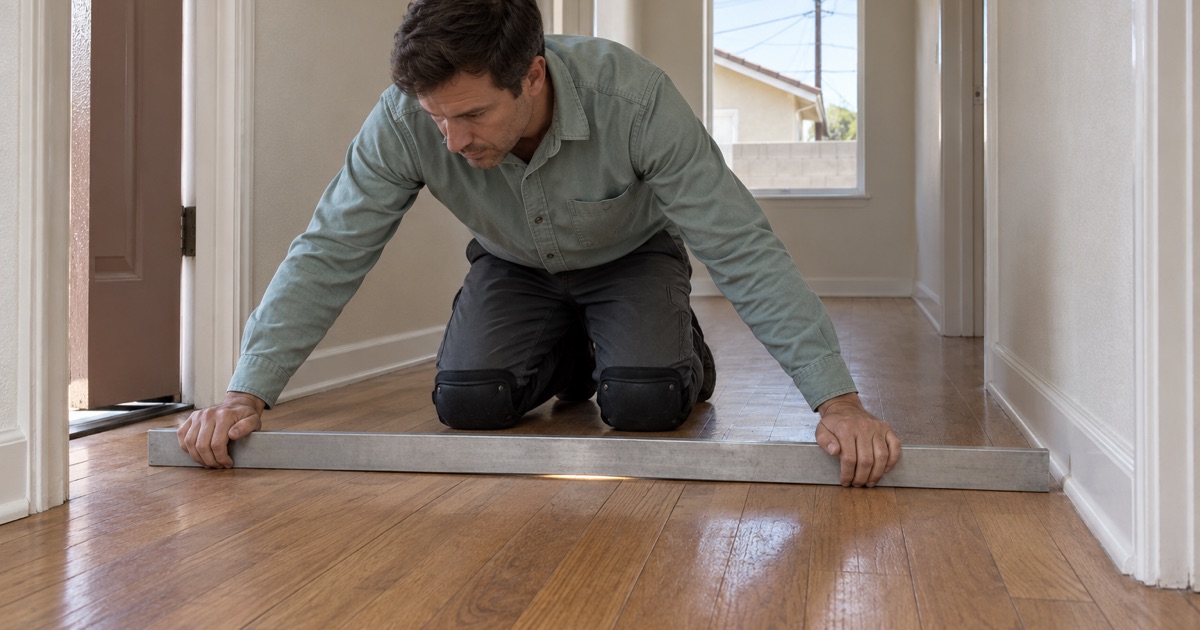
A floor that dips or flexes at one spot usually has a problem in the subfloor or the joist beneath it rather than in the wood you see. We open the area, find out whether the decking is water-swollen, delaminated or undersupported, and repair the structure before touching the finish. Fixing only the surface leaves the soft spot waiting to come back.
Cupping, Crowning and Buckling in Hardwood
Cupping, where board edges sit higher than the centers, means moisture is coming from below, while crowning is the reverse and often follows a cupped floor sanded flat too soon. Buckling, where boards lift off the subfloor, signals a serious water event or a missing expansion gap. We take moisture readings to identify which one you have, because the fix for each is different.
Gaps Opening Between Boards
Small seasonal gaps in solid hardwood are normal as the wood gives up moisture in drier months. Gaps that keep widening, or that show up in one room only, point to a subfloor, fastening or moisture problem we can trace. Depending on the cause, we fill, re-lay or replace boards rather than packing filler into a gap that will push it back out.
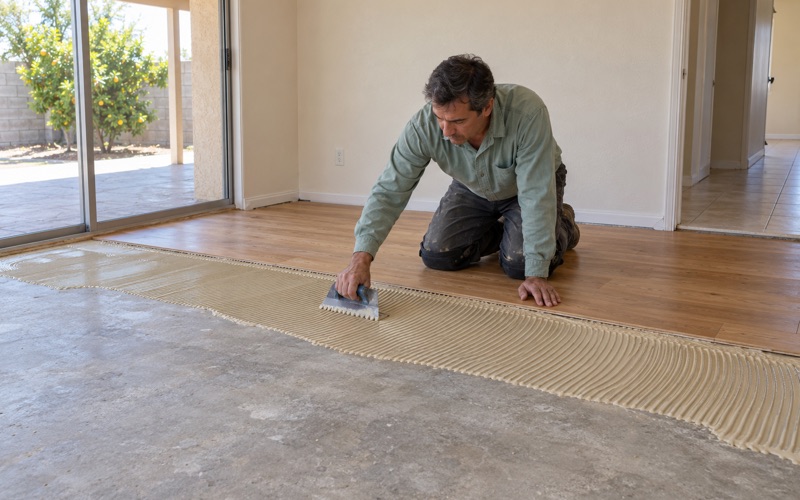
Squeaks come from boards rubbing against each other or against loose fasteners, and a hollow sound under an engineered floor often means a glue-down install has lost its bond. We locate the source from above and, on a raised house, from the crawlspace, then refasten or re-adhere the affected section. Quieting a floor properly means fixing what moves, not masking the noise.
Sloping Floors in Older Raised Houses
In an older house on a raised foundation, a floor that runs downhill toward one wall can come from settled piers, a sagging floor joist or a weakened cripple wall. We check the framing before quoting any floor work and can strengthen joists by sistering them where the structure allows. New hardwood laid over an unleveled frame simply takes on the same slope.
Water From a Leak, Water Heater or Dishwasher
Water from a supply line, a failing water heater or a dishwasher travels under the boards faster than it shows on top. We trace the water back to its source, map how far it spread with a moisture meter, and record the readings with photos. That record decides how much of the floor can be dried and saved and how much has to come up.
Termite Frass and Small Holes in the Boards
Tiny pellets on the floor and small round kick-out holes are the classic signs of drywood termites, while fine powder can point to powderpost beetles instead. Once a pest control company has treated the infestation, we cut out the damaged boards and weave in replacements. Patching over active damage only hides it until the boards give way.
Pet Urine Stains That Reached the Wood
Pet urine that soaks past the finish turns oak gray or black, and the stain usually runs deeper than sanding can reach. We test whether a stain lightens under the sander and, when it does not, replace those boards with a weave-in repair matched to the surrounding floor. Staining darker over it leaves a patch that shows through any color.
Deep Scratches, Dents and a Single Damaged Board
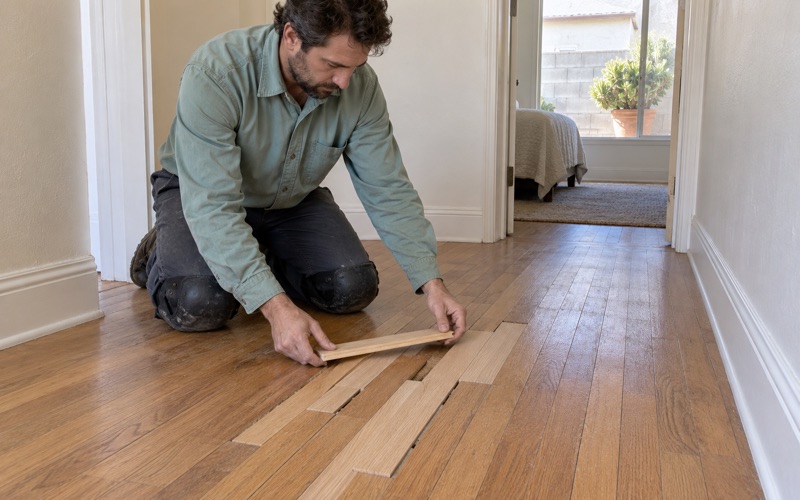
One split or gouged board does not mean replacing the whole room. We cut out the damaged piece, weave in a board of the same species and width, and blend the finish so the repair disappears into the floor. For scratches that stayed in the finish, a screen and recoat may be all the floor needs.
Peeling, Tacky or Worn-Through Finish
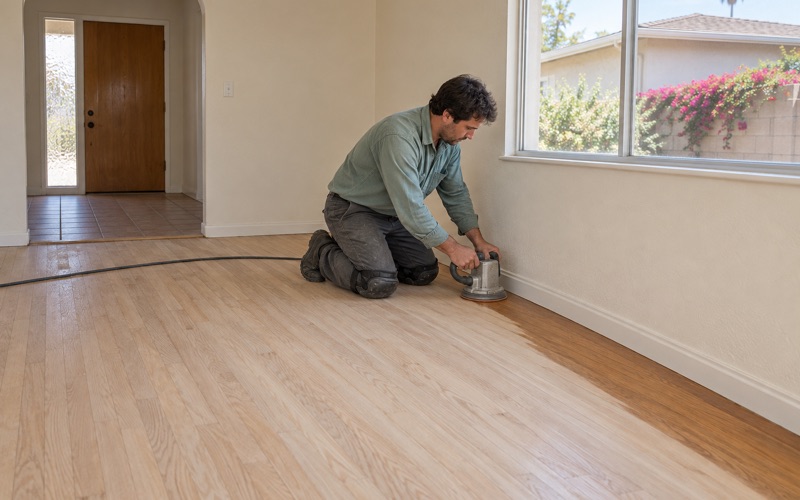
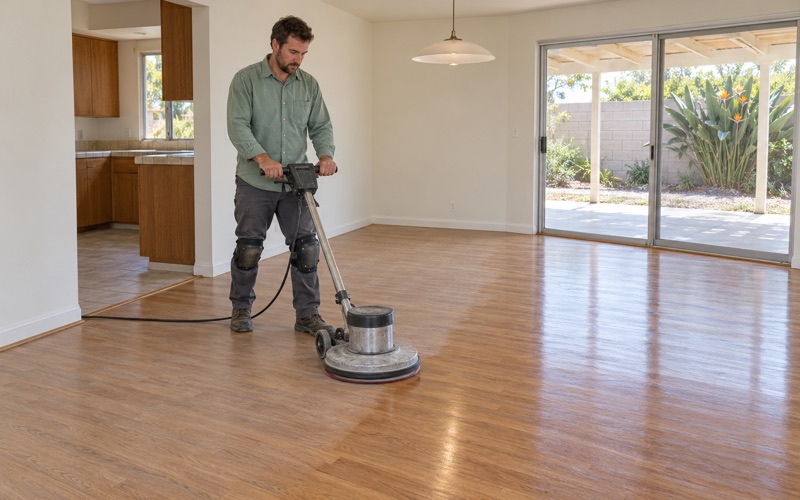
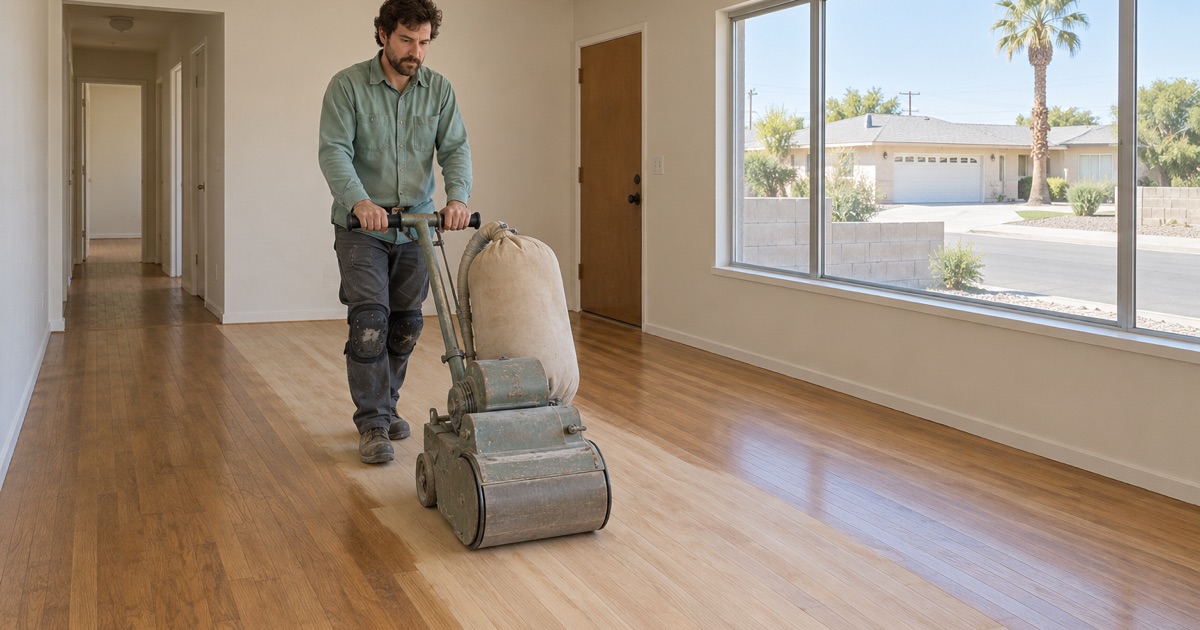
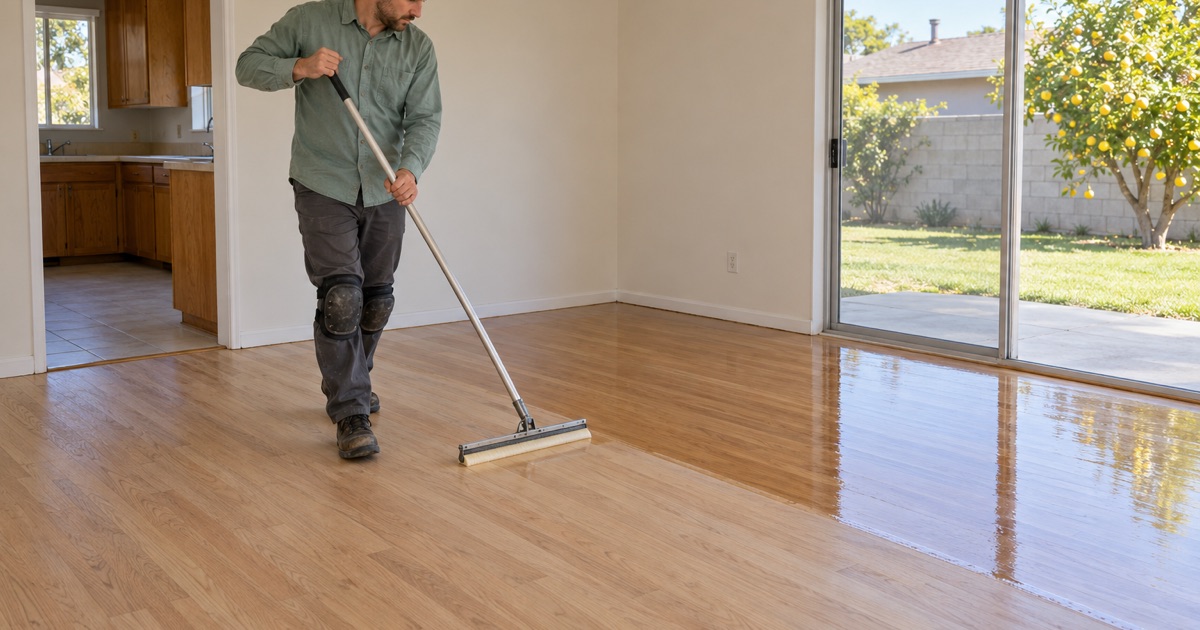
Peeling polyurethane usually means it went down over contamination or an incompatible earlier coat, and a finish that stays tacky has often not cured properly. We diagnose the cause first, because recoating a failing finish repeats the failure. Where traffic has worn through to bare wood, a full sand and refinish is usually the only lasting fix.