
Carson Wood Flooring offers screen and recoat service for hardwood floors in Carson, CA, serving surrounding cities including West Carson, Compton, Wilmington, West Rancho Dominguez, East Rancho Dominguez. After more than 20 years of caring for wood floors, we recommend it as the service that most often saves owners from needing a full sand and refinish.
A screen and recoat, sometimes called a buff and coat, renews the protective finish on a floor that is dull and scuffed but not worn through. It removes no wood, keeps the existing stain color, and can usually be completed in a day or two. Done at the right time, it can be repeated several times before a full refinish is needed.
When a Screen and Recoat Is the Right Service
Dull Traffic Lanes and Light Scratches
The clearest sign is a floor that looks fine along the walls but dull in the paths people walk: the front door, the hallway, the kitchen. Light scratches that sit in the finish, rather than in the wood, also respond well. If the stain color is still even and the finish has not worn through anywhere, a recoat will usually bring the floor back.
When It Is Too Late for a Recoat
Once traffic has worn through to bare or gray wood, a recoat will not fix it, because new finish on bare wood looks different from finish on sealed wood. Deep scratches, dents, water stains and pet stains that reach into the wood also need sanding or board replacement. We tell you honestly if the floor has gone past the point where a recoat helps.
Recoat or Full Refinish: The Cost Difference
A full refinish sands the floor to bare wood, which takes several passes with heavy machines, removes a thin layer of the floor each time, and involves stain and multiple coats. A screen and recoat skips all of the sanding and usually needs just one coat, so it costs a fraction as much and puts the room back in use sooner. It also preserves the floor’s sanding life, since no wood is removed.
The tradeoff is that a recoat cannot change the color or remove damage in the wood. If you want a new stain color, or the floor is badly marked, the full refinish is the right choice.
How a Screen and Recoat Is Done
Cleaning and Adhesion Testing
The most important step comes first. Floors cleaned with wax, oil soap, polish or some household products can carry residues that prevent new finish from bonding, leading to peeling polyurethane a few weeks later. We deep-clean the floor and test adhesion in a small area before committing to the whole room.
If the test fails, we explain the options, which may include a different cleaning process or a full sand and refinish. Skipping this step is the most common reason recoats fail.
Screening the Existing Finish
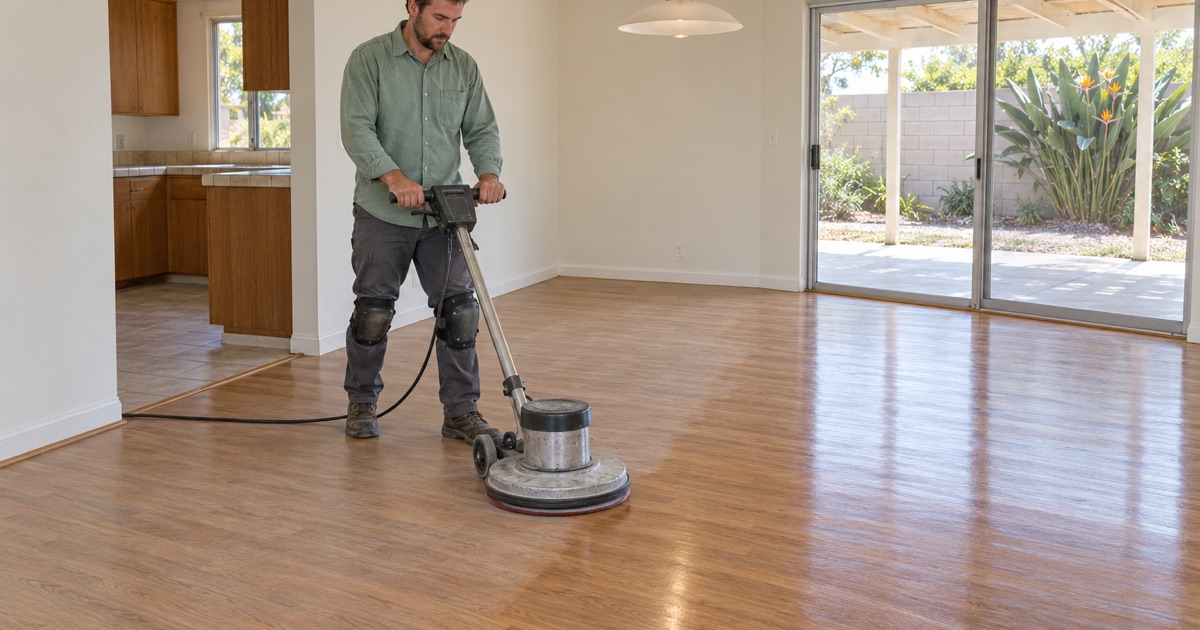
We abrade the entire floor with a fine screen or pad on a buffer, which dulls the surface and creates a profile for the new finish to grip. Edges and corners are abraded by hand. The dust is then vacuumed and the floor wiped with a tack cloth so nothing is trapped under the new coat.
Applying the New Coat
We apply one or more coats of finish, chosen to be compatible with what is already on the floor. Waterborne polyurethane cures quickly with little odor, while oil-modified polyurethane gives a warmer tone. Every finish we apply meets the South Coast air basin’s 275 g/L limit for wood coatings under SCAQMD Rule 1113.
Recoating Different Kinds of Floors
Site-Finished Solid Hardwood
Floors that were sanded and finished in place are usually the easiest to recoat, because the existing finish is a known type of polyurethane. Most of the oak floors in Carson’s older houses fall into this group. As long as the finish is intact and clean, a recoat bonds well.
Prefinished and Engineered Floors
Many prefinished and engineered floors carry factory finishes that are very hard and contain additives that resist new coatings. Some can be recoated with specific products and careful preparation, while others cannot. We check the manufacturer’s guidance where possible and always test first.
Where a factory finish will not accept a recoat, the options are a full sand, if the wear layer is thick enough, or a maintenance product the manufacturer approves. We explain which applies to your floor rather than applying a coat that is likely to peel.
Rentals Between Tenants
For landlords, a screen and recoat is often the quickest way to refresh a floor between tenancies without the cost and downtime of a full sand. We schedule it to fit the vacancy and provide an invoice that shows the work done, which is useful for itemizing any deposit deductions under California law.
Keeping the Finish Healthy Afterward
Cure Time and Furniture
A recoat cures faster than a full refinish, but it still needs time before heavy use. We give you a written schedule showing when the floor can take socks, shoes, furniture and rugs. Felt pads under furniture legs and a gentle return of rugs help protect the fresh coat.
Cleaning Products That Protect the Next Recoat
Use a cleaner made for polyurethane-finished floors and avoid wax, oil soap and polish products, which build up and can block future recoats. A dry microfiber mop for daily dust and a damp, not wet, mop for occasional cleaning keeps the finish in good shape until it is next due.
- 20+ Years on Wood Floors
- Moisture Readings in Writing
- Air-Basin-Compliant Finishes