
Carson Wood Flooring provides water damaged hardwood floor repair in Carson, CA, serving surrounding cities including West Carson, Compton, Wilmington, West Rancho Dominguez, East Rancho Dominguez. In more than 20 years on wood floors, we have learned that water damage is rarely as small as it looks on the surface, and that the decisions made in the first days after a leak decide how much of the floor can be saved.
Water travels under hardwood along the subfloor and between the boards long before it shows on top. A leak under a kitchen sink can spread into the dining room, and a failed water heater can wet a hallway several feet from the closet it sits in. Our first job is to find how far the water actually went, not just where it was noticed.
We trace every water-damaged floor back to its source, measure the moisture in the wood and the subfloor, and record our readings and photos. That record guides the repair and gives an insurance adjuster something concrete to work from, instead of a verbal estimate from someone who looked at the floor once.
First Steps After Water Reaches a Wood Floor
Stop the Source and Remove Standing Water
The first priority is stopping the water, whether by closing a fixture valve, shutting off the main or isolating a failed appliance. Standing water should be removed as quickly as possible with a wet vacuum or towels, and wet rugs and furniture moved off the floor. Every hour that water sits on or under wood increases the chance that boards will need replacing rather than drying.
Photograph the damage before cleanup goes too far, including the source if it is visible. Those pictures often matter later, both for the insurance claim and for working out how the water moved.
Why Fans Alone Are Not Enough
A box fan blowing across the surface dries the top of the boards but leaves moisture trapped underneath, which is exactly what makes a floor cup. Effective drying moves moisture out of the wood and the subfloor together, often with dehumidifiers and, in some cases, specialized drying systems that pull air through the floor. The goal is even drying from both faces of the board.
If a water mitigation company is already on site, we coordinate with them. Our readings and theirs should agree before any repair decisions are made.
When to Call Before Pulling Boards
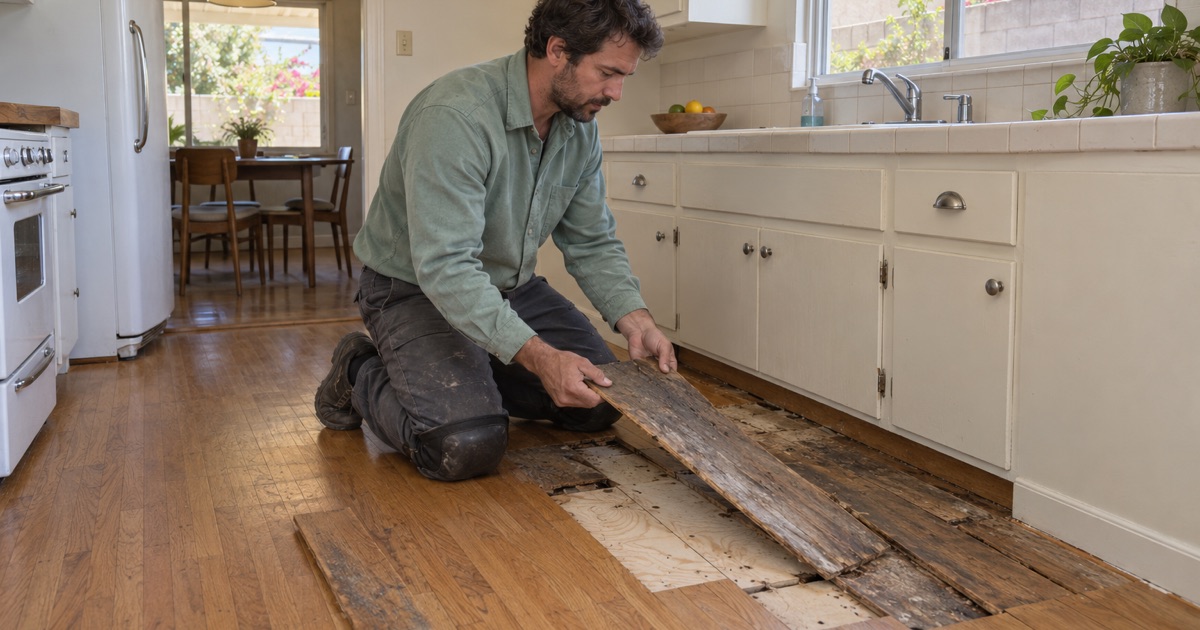
It is tempting to start ripping up wet boards, but removing sound wood too early can turn a drying job into a replacement job. Some boards need to come out to let the subfloor dry, and others will recover in place. We help decide which is which based on readings, so you do not lose flooring that could have been saved.
Reading the Damage
Moisture Mapping With a Meter
We take readings with a wood moisture meter across the affected area and well beyond it, until we reach boards that read the same as a dry reference room. Mapping those numbers shows the true edge of the damage. We repeat the readings over the following days to track drying, and each set is written down with the date. Where the floor sits on concrete, we also check the slab, because a wet slab keeps feeding moisture into the wood above it long after the leak is fixed.
Cupping, Crowning and Buckling as Evidence
The shape of the damage tells part of the story. Cupping, with raised board edges, means moisture came from below and the undersides swelled. Crowning, with raised centers, often follows a floor sanded before it dried. Buckling, where boards lift off the subfloor, means the floor took on enough water to push against itself and the walls, and those boards usually need to be reset or replaced.
Stains, Mold and Swollen Subfloor
Dark gray or black stains show where water reacted with the tannins in oak, and they usually do not sand out. When boards come up, we check the subfloor for swelling, delamination and mold. Swollen particleboard or OSB decking has to be cut out, and visible mold or a strong musty smell calls for a mold assessment before the floor is closed again.
Carson Water Sources We Trace
Supply Lines, Dishwashers and Water Heaters
Most interior water damage comes from plumbing fixtures and appliances: a split supply line under a sink, a leaking dishwasher connection, a toilet seal, a refrigerator ice maker line, or a water heater at the end of its life. In houses built in the 1950s and 1960s, which make up much of Carson, original plumbing and appliance locations are often tucked beside wood floors. We find the source and confirm it has been repaired before we start on the floor.
Slab Moisture and Crawlspaces
Not all water damage comes from a single event. A slab that was never tested before wood went down can push moisture into the floor slowly, and a raised house with poor crawlspace ventilation can keep the underside of the floor damp for months. These show up as gradual cupping rather than a sudden flood, and they need a different fix: a vapor retarder, better ventilation or a change of product.
Flood Risk Near the Dominguez Channel
The Dominguez Channel runs through Carson on its way to the harbor, and the City of Long Beach reports that FEMA analysis found the Compton Creek and Dominguez Channel levees unable to contain a 100-year flood. Owners near the channel may want to check their current flood zone status and insurance. Flood water from outside is usually dirtier than a supply-line leak and often means more of the floor and subfloor has to be replaced.
Drying, Repairing or Replacing
Drying in Place
Where boards have cupped but stayed attached, and the subfloor is sound, drying in place is usually the first choice. We monitor moisture until the boards match a dry reference, then reassess. Many floors flatten considerably once the moisture evens out, which can reduce the repair to a sand and refinish.
Sanding After the Floor Settles
Once the readings are stable, any remaining cupping can be sanded flat and the floor refinished. Sanding too soon is one of the most common mistakes after water damage, because it leaves the boards crowned when they finish drying. We wait for the numbers rather than the calendar.
Replacing Boards and Subfloor
Boards that buckled, stained black or sat on damaged decking are removed, and any swollen or delaminated subfloor is cut out and replaced. New boards are woven into the existing floor, then the room is usually refinished so old and new take the same color. Where the damage is widespread, replacing the whole floor in the affected rooms may be simpler and more even.
Documentation for Insurance Claims
Photos, Readings and a Source Report
For every water-damaged floor we record the source, the moisture readings with dates and locations, photos of the damage before and during repair, and a written scope with costs. That package lets an adjuster see what happened and why each part of the repair is needed. It also protects you if questions come up later about how far the damage extended.
How Claims Are Handled in California
California’s fair claims regulations, including 10 CCR 2695.9, set standards for how insurers handle property repair and replacement claims. We do not negotiate your claim or advise on coverage, but our documentation is written so it can stand up to review. Clear, dated readings and a traced source are what move a claim forward.
- 20+ Years on Wood Floors
- Moisture Readings in Writing
- Air-Basin-Compliant Finishes